The Cranberries

The tiny Flag Café was the venue on November 18th, 1989 as teenage Limerick four-piece The Cranberry Saw Us played their first hometown gig.

Bonding over a shared love of Joy Division, New Order, The Smiths and Talking Heads, the line-up that afternoon was Noel Hogan on guitar, his younger brother Mike on bass, Fergal Lawler on drums and Niall Quinn on vocals.

When Niall decided a few months later that his rock ‘n’ roll future lay elsewhere, he hooked Noel, Mike and Ferg up with a female singer who was in his girlfriend Catherine Hayes’ class at Laurel Hill school.

They weren’t sure what to make of Dolores O’Riordan when she arrived for her audition wearing a shiny pink tracksuit and with a Casio keyboard tucked under her arm – but knew they’d struck gold when she launched into a spinetingling version of ‘Nothing Compares 2 U’, which did Prince and Sinéad O’Connor proud.

As she left to go home, Noel handed Dolores a cassette containing a rough version of an instrumental they’d been working on, and asked her to have a go at finishing it off.

Within a few days she’d come up with the melodies and lyrics for ‘Linger’, a song which perfectly encapsulates the heartbreak of teenage love.

Dolores now officially on board, the newly abbreviated Cranberries started sending out demo tapes featuring ‘Linger’ and such other future classics as ‘Sunday’ and ‘Dreams’.

This triggered a frenzied industry bidding war which was won in 1991 by Island Records, already home to fellow Irish band U2, who promptly put Dolores, Noel, Mike and Ferg to work in the studio.

After the first few sessions failed to click, their legendary A&R man Denny Cordell asked the band to compile a producer wish-list.

Aiming high, Noel suggested Stephen Street and was shocked and delighted in equal measure when the Smiths and Blur go-to said “Yes!”

Recorded in Dublin and London, The Cranberries’ debut album, Everybody Else Is Doing It, So Why Can’t We?, was released on March 1st, 1993 with the cover featuring a shot of the band sat on a sofa, which soon became almost as famous as them!

It didn’t make much of an impact at first, but then ‘Linger’ exploded in the States where, thanks to the brilliant film noir video accompanying it, the band were embraced by the MTV generation.

The Cranberries’ next big thing status was confirmed when Michael Stipe turned up at the shoot and later invited Dolores and the boys to open for R.E.M.

“I was instantly captivated by The Cranberries,” Michael said in the band’s official Why Can’t We? book published by Ireland’s Hot Press magazine. “They were this young, vibrant, super-excited group of people who were making beautiful music. Dolores inherited the Irish storytelling tradition that’s been passed down from generation to generation. She just shone and you knew the band were going to be superstars.”

And so it turned out to be with Everybody Else… eventually climbing to no. 18 on the US Billboard 100 and selling 3.2 million copies in America alone.

Along with their own increasingly big gigs, The Cranberries also went out on an arena tour with Duran Duran whose posters had adorned Dolores’ bedroom walls growing up.

“We went from playing the Psychic Pig in Trowbridge to Radio City Music Hall in New York in the space of twelve months,” Noel Hogan says of their rapid ascent. “It was pure craziness.”

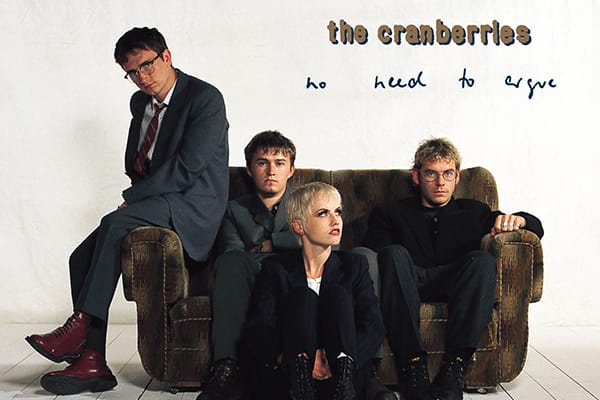
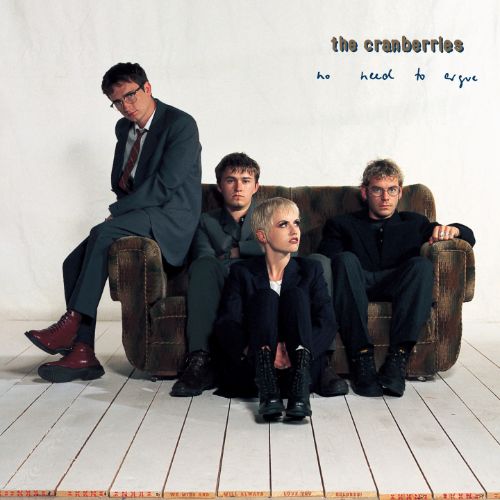
By the time their second album, No Need To Argue, was released on October 3rd, 1994, The Cranberries were an arena-headlining act in their own right with fans on all five continents.

Once again produced by Stephen Street, lead single ‘Zombie’ immediately entered the pantheon of great protest songs, Dolores bristling with righteous anger as she called out violent governments and terrorist organisations.

A number one record in Ireland, the UK, France, Germany, Austria. Spain, Sweden, New Zealand and Australia, No Need To Argue’s success led to The Cranberries playing to 164,000 people at Woodstock ’94; George Clooney taking care of the introductions when they performed on Saturday Night Live; Dolores appearing on the cover of Rolling Stone; and her and Noel receiving a coveted Ivor Novello International Achievement Award.

“I really think that what makes people tune into The Cranberries is the honesty of the music,” Dolores noted at the time. “Some fans say, ‘Aren’t you embarrassed singing about such things?’ and I say, ‘That’s what makes me what I am.’ I’m not going to change for anyone.”

Dedicated to Denny Cordell and Dolores’ grandfather Joe Greensmith who’d both recently passed away, 1996’s To The Faithful Departed was produced by AC/DC, Bon Jovi and Van Halen man Bruce Fairbairn who brought his rock A-game with him.

Among its fifteen pulsating tracks was one of Dolores’ most personal songs yet, ‘When You’re Gone’ which included such heartrending couplets as: “Hold on to love, that is what I do/ Now that I’ve found you/ And from above, everything’s stinking/ They’re not around you.”

The extended version of the album included the spinetingling version of ‘Ava Maria’ she’d performed in September 1995 with Pavarotti as part of his Together For The Children Of Bosnia concert.

Afterwards, Simon Le Bon introduced Dolores O’Riordan to Princess Diana who professed to being a Cranberries fan.

There was more rubbing shoulders with royalty in 1998 when The Cranberries played at the Nobel Peace Prize ceremony attended by the King Of Norway.

Resplendent in a striking Storm Thorgerson cover, 1999’s Bury The Hatchet saw another change of producer with David Bowie, Radiohead and Depeche Mode man Ben Fenner adding his studio sheen to the likes of ‘Animal Instinct’, ‘Promises’ and ‘Just My Imagination’.

By now The Cranberries were etched into popular culture with Family Guy, Derry Girls, The Office US, Pitch Perfect, Clueless, Yellowjackets, Army Of The Dead, Roswell, New Mexico some of the major films and TV series they’ve helped to soundtrack.

Latterly, ‘Dreams’ has taken on a new life as the Limerick Gaelic football and hurling anthem while ‘Zombie’ blasts out of the P.A. whenever the Ireland rugby team play at home in Dublin’s Aviva Stadium.

Stephen Street was back in the fold for 2001’s Wake Up And Smell The Coffee which was the sound of a band reinvigorated.

“Everyone was feeling good, nobody was burnt out and we were ready to go for it again with more confidence,” Fergal Lawler says of the album, which became an instant fan favourite. “And we worked with Stephen again – it was just what we needed, that passion he got out of us as players.”

A deeply spiritual person, Dolores was overjoyed when shortly after Wake Up And Smell The Coffee’s release she was invited to perform at the Concerto di Natale in The Vatican and granted an audience with Pope John Paul II.

She also got to sing for and meet his successor, Pope Francis, on a 2013 return trip to Rome.

After thirteen years on the writing/recording/touring treadmill, The Cranberries in September 2003 announced a two year hiatus, which ended up lasting until 2009.

During the break, Dolores released two well-received solo albums, Are You Listening? and No Baggage, while Noel recorded with a number of different people under the Mono Band banner, and Fergal also spent time in the studio producing albums by a number of Irish artists.

The catalyst for The Cranberries reuniting was Dolores being made an honorary patron of Trinity College Dublin’s Philosophical Society.

What no one knew until that night was that she’d invited Noel and Mike to perform an intimate acoustic session with her.

Given the musical magic which ensued, it was no surprise when afterwards the band announced that they were getting back together.

Released in 2012 and featuring the likes of ‘Fire And Soul’, ‘Raining In My Heart’ and ‘Conduct’, the Stephen Street-produced Roses album seamlessly picked up where The Cranberries had left off a decade earlier and earned them a whole new generation of fans.

Living up to its title, 2017’s Something Else found Dolores, Noel, Mike and Ferg back on their signature sofa and treating fans to ten orchestral and unplugged versions of previous hit singles – among them ‘Linger’, ‘Dreams’, ‘Zombie’ and ‘Ode To My Family’ – as well as serving up three stunning new tunes.

On January 15th, 2018 the terrible news broke that Dolores had passed away in London’s Hilton Hotel, aged 46. She’d been recording the vocals for The Cranberries’ eighth studio album with Stephen Street once again at the production helm.

After taking time out to grieve, Noel, Mike and Fergal decided in consultation with Dolores’ family to finish off the aptly-titled In The End, which was released on April 26th, 2019 and earned The Cranberries their first GRAMMY® Best Rock Album nomination.

“When you spoke to her, it was always, ‘So much has happened to me over the last three years that I want to write about’ – and a lot had happened,” Noel Hogan says of their swan song record. “It felt like she did five times the living the rest of us did. There was so much that needed to come out.

“I’m just glad we had the adventures together that we did and have an album we’re all immensely proud of to say ‘goodbye’ with.”

Fast forward to the present and The Cranberries’ continued relevance is reflected in them being cited as a key influence by the likes of Phoebe Bridgers, Mumford & Sons, Hayley Williams, The Script, Jared Followill, Adele, Josh Groban, Halsey and Hozier who notes that, “My first time hearing Dolores O’Riordan’s voice was unforgettable.”

In November 2025, Noel accepted the third annual Rolling Stone UK Icon Award on behalf of the band and then joined Australian hot shots Royel Otis on stage for a celebratory performance of ‘Linger’.

So far this year, ‘Linger’ also got a live airing when Noel and Mike were invited on stage at the Dublin 3Arena by New York sensation Sombr; in a listeners’ poll conducted by national broadcaster Today FM, ‘Zombie’ was adjudged to be the Greatest Irish Song of all-time; and ‘Dreams’ soundtracked the trailer for the new Handmaid’s Tale spinoff, The Testaments.

Add in the vinyl re-release of the Cranberries’ debut Uncertain EP and the 33rd anniversary reissues of Everybody Else Is Doing, So Why Can’t We? and there’s no shortage of things for fans to be excited about in 2026!

– STUART CLARK
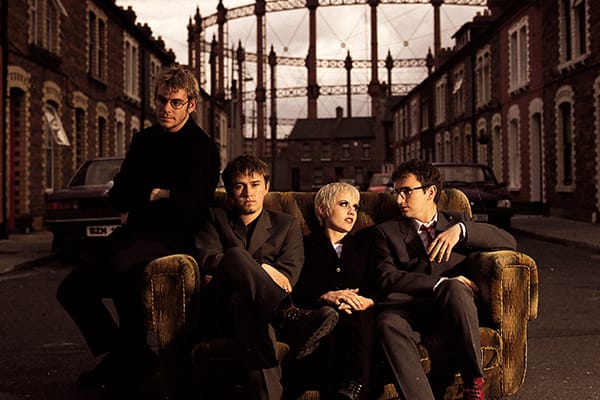
It all started for the band back in the mid-1980s, when Lawler and the two Hogan brothers met as teenagers growing up in Limerick – and, sharing a love for groups like the Cure and the Smiths, decided to try their hand at rock music. Initially, they formed a quartet with a male singer, though after six months, in early 1990, he left – at which point he suggested his girlfriend’s friend, who came from Ballybricken, a small town outside Limerick, as a replacement.

When Dolores came to audition for them, a rural girl suddenly among city boys, she was “quiet as a mouse”, as Noel recalls – until she sang, that is. “We were immediately, blown away,” says Mike. “Her voice was something special.” Dolores, in turn, was enamoured by the boys. “I really liked what I heard; I thought they were nice and tight,” she later recalled. “It was a lovely potential band but they needed a singer – and direction.” There was no question that they had found their new fourth member.

The band gained not only a compelling frontwoman but a brilliant musician. From a young age, Dolores learnt classical piano, and played piano, and harmonium in her local church, as well as singing in the choir. “I used to go from school to piano lessons to home and maybe I’d have to go to church and then I might have some homework and go to bed,” she said, of her early years routine. When she was 17, she then taught herself guitar. But above and beyond her training, she had an “amazing ear”, says Noel. “She was streets ahead of the rest of us in the beginning, but that was a good thing. It forced all of us to up our game.”

As songwriters, Noel and Dolores gelled immediately, while finding their own particular way of working. From the very beginning, they never wrote in the same room together. Back then, Noel would lay down guitar parts on cassette which he’d then give to Dolores to develop verses and chorus around in her own space and time. For the first two years of the band, they wrote like crazy, Noel recalls. “It was that thing where you’ve found somebody that you clicked with, and you wanted to get as much as you could out of that.”

At the same time, after their demo of ‘Linger’ did the record company rounds over in London, they quickly became the talk of the industry. In the summer of 1991, following a gig at the University of Limerick which was also attended by 32 A&R men, they signed to Island Records. The reason they chose the celebrated label was because of Denny Cordell, the legendary record producer who was at that time Island’s A&R. Seeing their long-term potential, he promised to allow the band the chance to develop at their own pace and suggested they get some touring under their belt in the first instance.

The following year, they then began recording their debut album Everybody Else is Doing It So Why Can’t We? with producer Stephen Street. Street had worked with The Smiths and Blur, as well as co-writing Morrissey’s first solo album Viva Hate, and so his involvement was a dream come true. He has subsequently taken the reins on four further albums with them, including In the End. Noel credits him with helping to create the sweepingly epic Cranberries sound. “What happened was not just down to the songs – the production had a lot to do with it.”

The album’s title was Dolores’ creation, as every album title was; it expressed perfectly their determination to succeed. “Elvis wasn’t always Elvis,” she said, explaining its meaning. “He wasn’t born Elvis Presley, he was a person who was born in a random place. Why shouldn’t a band from a small city in the Southwest of Ireland get signed, conquer the world, and make a great record?”

And conquer they did. The success of Everybody Else is Doing It, So Why Can’t We? remains remarkable. After being released in the UK in March 1993, the album really took off a few months later when Linger was picked up by college radio in America and the band subsequently toured across the Atlantic. It would go on to hit no 1 in both Ireland and the UK, and sell more than six million copies worldwide. From the heart-wrenching Linger, a song inspired by Dolores’ first kiss, to the giddy Dreams, it managed to convey the highs and lows of young love with a rare purity and tenderness.

After that, no one would have expected Zombie: the lead off single from 1994’s second album, No Need to Argue, and an era-defining howl of rage. Inspired by the IRA Warrington bombings, which left two boys dead, it saw Dolores fiercely decrying the violence of the Irish conflict over distorted, hard-rock guitars. “This song is our cry against man’s inhumanity to man, inhumanity to child. And war, babies dying, and Belfast, and Bosnia, and Rwanda,” she explained at the time. “It was a turning point for us,” recalls Noel. “I always remember the day she came in with it. We were in a tiny little shed in Limerick, where we were rehearsing. She came in and started playing it on acoustic guitar and we played along but she was like ‘no this needs to be heavy, it’s an angry song, and it needs to reflect that.’”

As well as having an immense cultural impact, it was transformative for the band musically. “We learned from that song that you can actually do a lot with that aggression – and particularly live, it made a massive difference to us, because we became this loud, anthemic band all of a sudden,” says Noel. They carried both its harder sound and wider lyrical focus onto their third album, 1996’s To the Faithful Departed.

Two more albums followed, 1999’s Bury the Hatchet and 2001’s Wake Up and Smell the Coffee, whose maturing outlook reflected their life experiences: “Animal Instinct”, on Bury the Hatchet, for example, saw Dolores powerfully evoke her experience of new motherhood. By 2003, all four of the band were ready for a break, after a relentless decade of recording and touring, and so they went on hiatus, with each pursuing their own separate musical projects.

But after the band reunited for a world tour in 2009, they found themselves re-energised, and so returned to creating new material again. Their next album, 2012’s Roses, was an especially atmospheric collection, which incorporated new textures into their sound. “Because we’d all gone off in different directions, we all came back into the band with these new experiences and a new way of working and it was great,” says Noel. “It was a real buzz to do that album.” Among its highlights was the otherworldly title track, which Dolores wrote in memory of her late father, who died in 2011 and was one of her true guiding lights.

Another break followed, before 2017’s Something Else, which saw them stripping back and reworking some of their most classic tracks with the help of a string quartet from the Irish Chamber orchestra. To add to the sentiment of the project, they recorded it in Limerick, making it the only album they completed in their hometown. What the end result foregrounded was the fundamental power of their melodies. “If anything, I’d never write songs like those early ones now, as it’s too easy” says Noel. “But I think their simplicity is what attracted people to them.”

It was accompanied by an acoustic tour, during which Dolores and Noel got the writing itch again. Then, when Dolores’ back problems meant the group sadly had to cancel the rest of their live dates, the pair started working in earnest. “She went back to New York, where she was living at the time, and I went to France to meet up with my family, but they weren’t there yet, so I was on my own for a few weeks,” recalls Noel. “We were both bored and I said ‘why don’t we see if we can write an album and use the time productively?’ and that’s what we did.” Over six months, in the second half of 2017, the two of them came up with the songs that have now gone on to form their final collection ‘In the End’.

In shock after Dolores’ passing, Noel and the rest of the band eventually began to look through the vocal demos that she had already recorded for the album. One thing was for sure, though: they weren’t going to release anything unless it could truly honour her by standing up as a brilliant piece of work in its own right. Thankfully, after some digging, they realised they had the material to make that happen. “There were bits that she had done but hadn’t sent to me so you’d have a verse and chorus but then no second verse and you’d think ‘it’s such a pity’”, says Noel. “But then Dolores’ partner came over with a hard drive and he had all these other bits she hadn’t had a chance to send, so we ended up with full songs.” And it helped, of course, Dolores was such a naturally virtuosic singer. “Even on a bad day, she clearly gave a great vocal performance.”

Produced once again by Stephen Street, In the End sees the band coming full circle, with a collection that evokes their very first LP. “When we listened to the demos, the three of us and Stephen were thinking ‘this sounds much closer to the first album than anything else’. Dolores was singing very softly on some songs, which was closer to how she would have sung back then, and the simplicity of some of the songs as well brought us back to that time,” says Noel.

Certainly, it’s an album that, tune after tune, snags immediately. It kicks off with a formidable one-two which is a reminder of their range. The driving All Over Now is a classic, widescreen Cranberries anthem, with Dolores giving voice to the fractures of a relationship against a backdrop of chiming guitars; then, following it, the haunting string-swept ballad Lost dials the tempo right down, while giving space to Dolores’ yearning vocals to soar to soul-piercing heights. Elsewhere, they veer from the grungy release of Wake Me When It’s Over to the tender, country-inflected A Place I Know and the upbeat jangle-pop of The Pressure.

If there’s an overall lyrical theme, it’s a sense of wiping the slate clean, and new beginnings, which reflected where Dolores was, both in her personal and her creative life: re-energised and ready for a new phase. “I remember talking to her that summer and she said ‘I’m starting all over here’ and a lot of the songs discuss that,” says Noel. But, as ever with The Cranberries, lyrics that may derive from individual experience masterfully tap into universal emotions, framing them in terms that we can all relate to, whatever age, gender or nationality.

As the huge wave of public adulation in the wake of Dolores’ passing showed, The Cranberries may be over, in one sense – but they will forever live on in the musical pantheon.

Tour dates

Sorry, there are no tour dates available at this time. Please check the artist’s website for more information.