


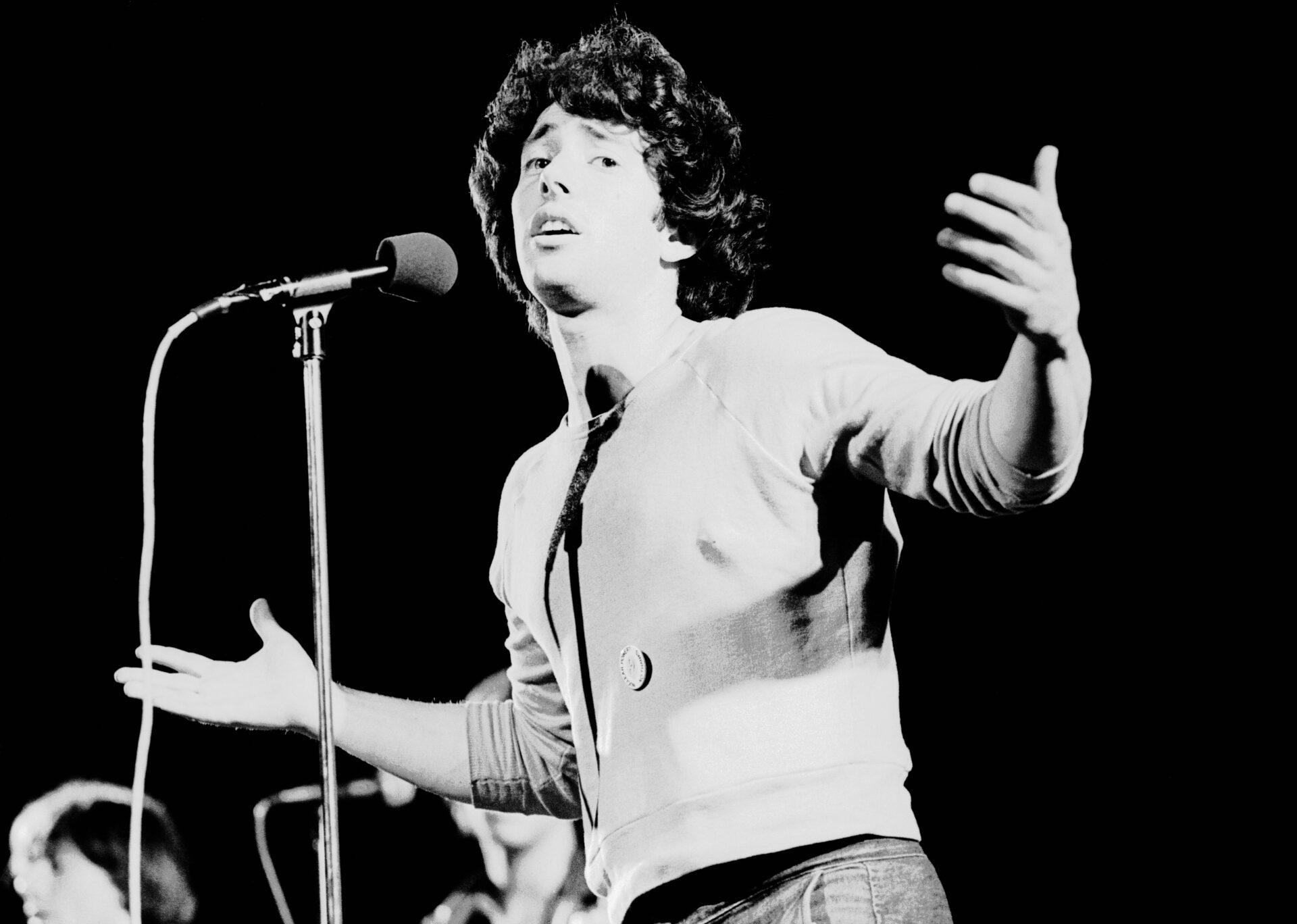
One could say Jonathan Richman marches to the beat of his own drummer, and for the past 30-some odd years keeping that beat is his constant partner Tommy Larkins. Since starting out as a Velvet Underground fanatic in the 1960s busking on the streets of Cambridge – where he once famously made the acquaintance of the late producer, songwriter and musician Andy Paley – JoJo, as he’s known to ardent fans, has released more than 20 albums spanning more than 50 years, starting with the legendary Modern Lovers and continuing to this day.
The Modern Lovers were an early psych garage band inspired by his adoration of Lou Reed, with dark, humor-laced songs such as “Roadrunner” and “Egyptian Reggae,” both of which were U.K. chart hits, the latter peaking at No. 4 in 1977.
With his status cemented as “The Godfather of Punk,” Richman proceeded to do an incredible about-face, unplugging his electric guitar and choosing to go more twee as a multi-lingual acoustic performer, settling on everyday pleasures like “Ice Cream Man,” “Rockin’ Rockin’ Leprechauns,” “Summer Morning,” “Angels Watching Over Me” and even a version of the classic kids tune, “The Wheels on the Bus.”
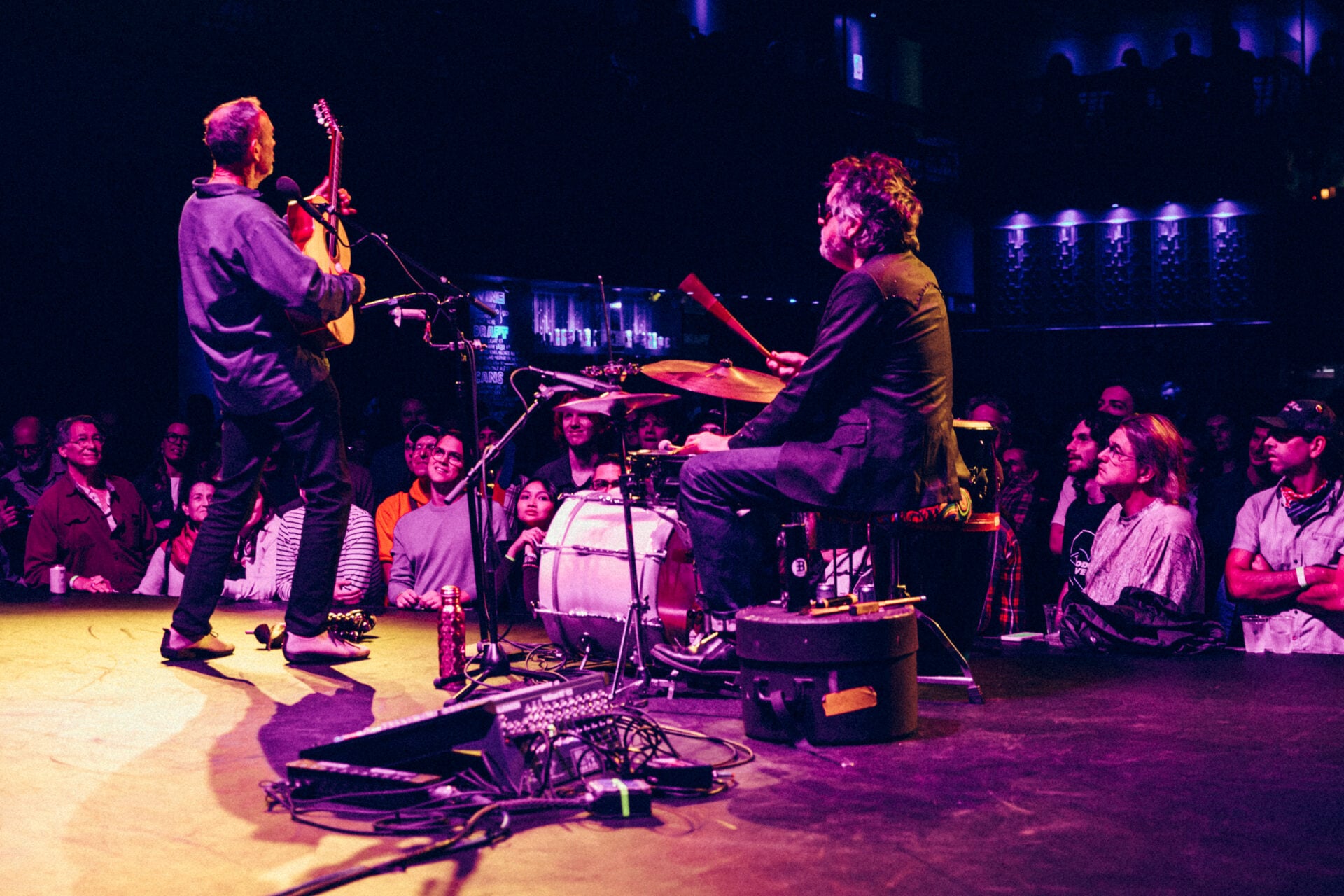
Richman, who will turn 75 this May, gained popular recognition as the on-screen troubadour in the Farrelly brothers’ 1998 hit comedy “There’s Something About Mary,” but has remained determinedly outside the mainstream ever since. Over the years, he continues to cultivate a young, hip audience, packing the house at the newly opened 500-cap Sid the Cat Auditorium in South Pasadena, California, recently to promote his latest album, Only Frozen Sky Anyway (Blue Arrow Records, Nov. 7) , which marks a reunion with his Modern Lovers’ bandmate Jerry Harrison, later of Talking Heads. (The original Modern Lovers formed in 1970 with a line-up that included bassist Ernie Brooks, drummer David Robinson—later of the Cars—and Harrison on keyboards)
With no manager to speak of, Richman’s team currently consists of the great Frank Riley of High Road Touring and his colleague Zachary Cepin; Debbie Gulyas at Blue Arrow; and publicist extraordinaire Rey Roldan at Reybee Inc; and Richman’s assistant Les Gripkey.
With this team firmly in place, Richman continues to do a modest and brisk live business performing primarily in 300-1,000-cap venues around the U.S., with his latest tour including appearances at venues like First Avenue in Minneapolis, Somerville Theater in his native Boston for three nights at the and a stop at the famed Belly Up in Solana Beach, CA. Upcoming stops on his current tour include the 900-cap Thalia Hall in Chicago on Feb. 27, a venue that sold clean at two years ago, grossing $31,170, according to Pollstar Boxoffice Reports. The ultimate cult artist, Richman’s eternally youthful style has resonated with yet another generation of admirers.
For the guy who once sang, “I’m in love with the modern world,” the fiercely iconoclastic Richman is a bit of a self-described Luddite when it comes to technology. He eschews in-person interviews, but did agree to answer 21 questions via email, along with a signed, typewritten note, “These questions were some of the most pertinent, professional and interesting questions I’ve been asked in the past ten years… Thank you.”
Thank you, Jonathan.
1. What did you think of performing at the new venue, the Sid the Cat Auditorium in Pasadena? It used to be an elementary school assembly hall.
Good sightlines, warm atmosphere, not difficult to obtain. Can be claustrophobic at the back we all heard — as the show was in progress — from a member of the audience. He, in an appropriately loud and calm voice asked — between songs, of course– that all patrons to the front take two steps forward. This fixed the problem (I asked him from the stage, just to make sure). These promoters, Sid the Cat, are nice, efficient and on-the-case, so I’m sure they won’t oversell the room in the future. The sound was good because they have left the early twentieth century acoustics more or less as they were. The one modification I saw as necessary for a show as intimate as ours is, was a slight ring in the stage itself to be got rid of in the bass register. I alerted them to this and I’m guessing they’ve worked this out by now.
2. How has touring changed for you since the beginning?
In this current climate of imposing sound gear in the middle of the hall, complete with an operator called a soundman (that’s right, there was almost no such thing when I was starting out) which is also a climate of rooms being sound-deadened to permit the musician to play too loud. I know: 1. Bring my own small sound mixing console which I put behind the drummer and use to do our own sound, rather than have a soundman in the middle of the hall do it, and 2. I ask those involved to book us into rooms not soundproofed very much (see question 1.).
Traveling to the shows is different, too. It’s more bland and lonely, without the colorful homey Greek and Italian late-night restaurants, coffee shoppes, diners and hideaways with rakish architecture of the ‘50s and ‘60s but WITH giant, grotesque, grey or beige chain stores with their parking lots of many acres. This changes the feel of the business very much!
But we have fun anyway and the people who come out to see us are so cool. This was maybe never better! Touring is still much fun for both me and the drummer, Tommy.
3. Are you surprised at how many young people are in your audience these days? To what do you attribute that? Your youthful outlook?
Um…because we’re great? I do not know but I get a lot of mail to my P.O. box from young people — like 16, 17, 22 years old… and they tell me my songs give them emotional support and that they are fun, which is all nice to hear, of course.
4. Are you satisfied with the level of success and fans you’ve achieved over the years?
Yes! This level we’re at in showbiz works just right for me. I’m known enough, so I get booked in theatres and clubs, but unknown enough so I can walk down the street. I wouldn’t change a thing; except maybe tell the people in charge of late-night places to make more of these places, about every 30 miles or so, with soft lights and a jukebox maybe, and hot chocolate and stuff, and maybe a cookie. You call ‘em this time; I called last time.
5. The new album, Only Frozen Sky Anway, has a feel of mortality to it. Does it reflect the loss of people you’ve worked with and admired over the years, like Andy Paley, Lou Reed and Brian Wilson?
I don’t hear in the new album mortality or loss. I hear an exploring of and a playing with what we all are and what we maybe all are not.
6. To what do you attribute your longevity? In many ways, you seem like an eternal adolescent.
Me, young? If so, perhaps gratitude for life itself comes into play.
7. You’re known for shutting off the air conditioning during your shows. Do you object to the noise or how it affects your singing voice?
Yah, I shut off the air conditioning because it’s too loud and wrecks the sound of the music.
8. What was it like working with Jerry Harrison (of the Modern Lovers and Talking Heads) again on the new album? How did that come about?
Since I asked Jerry to play a keyboard part for me three albums ago, I haven’t wanted to do an album without him. I bring him songs in the studio that I’m still making up and I don’t tell him a thing and he just plays and changes things with his approach and the songs are even better then. We have even more in common musically now than we did then.
9. Is this as close to a Modern Lovers reunion as we’re going to get?
Yes.
10. You still refuse to play songs like “Roadrunner,” “Astral Plane” and “She Cracked” in your current set, but you do play “Pablo Picasso.” How come?
I can’t play songs I don’t feel anymore. “Pablo Picasso,” especially the way we do it now, still feels current to me. (I must say I think my new verses are very funny.)
11. Do you have a prepared set list before you go on-stage, or do you wing it?
Of course, wing it.

12. How about your between-song patter? Is that spontaneous or do you have an idea what you’re going to say?
Between the songs, I’m ad-libbing but I do tell the same four jokes over and over. I hope they’re good.
13. You eschew modern world conveniences like email, Zoom, social media and a cell phone. How is that working out?
Great. I write letters.
14. You’ve been playing shows with drummer Tommy Larkins for over three decades now. Do you ever miss having a real band?
No. It wouldn’t fit. I ad-lib not just words but arrangements. I change key. I change chord progression in mid-song. Also, we’re not doing rock ’n’ roll. A usual rhythm section would overpower this stuff.
15. You have any feeling about being inducted into the Rock and Roll Hall of Fame?
I don’t belong there.
16. What was behind the cover of the Bee Gees’ “Night Fever” on the new album as a busking song?
I just thought our take on it would sound good on this record. Like most of the songs on this album, it either didn’t exist until we started recording or, in this case, we knew the tune but I just felt like it one night so we recorded it.
17. Have you ever thought about retiring from touring?
Someday, of course, but not right now. I’ve got too many new musical ideas and I want to play them for people.
18. Did you ever doubt you’d be able to forge a career in music?
I didn’t choose this. This chose me.
19. I remember seeing you in 1971 or 72 playing a mixer at Skidmore College, where the reception was pretty volatile. Did you enjoy playing to combative audiences, because these days you are mostly adored.
This doesn’t happen very often — whereas it once was almost all there was, but on the rare night where some of the guys in the audience get offended by this type of thing — like when seven or eight years ago, Neil Young asked us to open a few shows for Crazy Horse in a theatre in Bakersfield and one in Fresno — I enjoy this still. I told Neil: “I got love-hate out of ‘em!! I didn’t know I could still do it!” He laughed and laughed. (Those guys came around eventually, more or less…) I remember that Skidmore show incidentally. And I can see why they were mad. A dance band back then was supposed to do songs the audience knew and liked to dance to. It was not a great match.
20. Does the adulation on-stage ever get old for you?
Well, I don’t really want that. I want communication. I’d rather have people not like this show for the right reason than have them like it for the wrong reason.
21. How come you don’t do in-person interviews anymore?
I did them for 30 years. Misquotes everywhere, including outright fabrication. Harmful. Not funny. And, ya never knew when it would happen, or what magazine you could trust. So, no. –Roy Traki