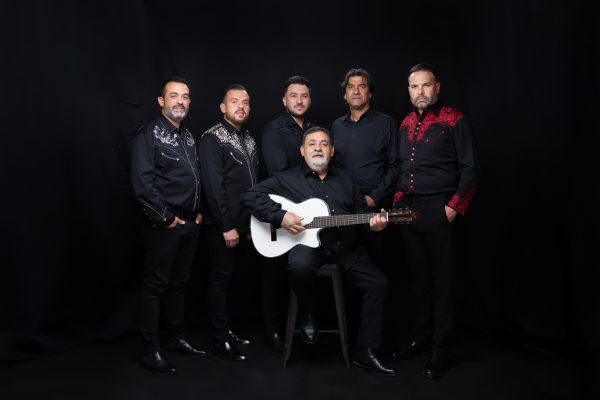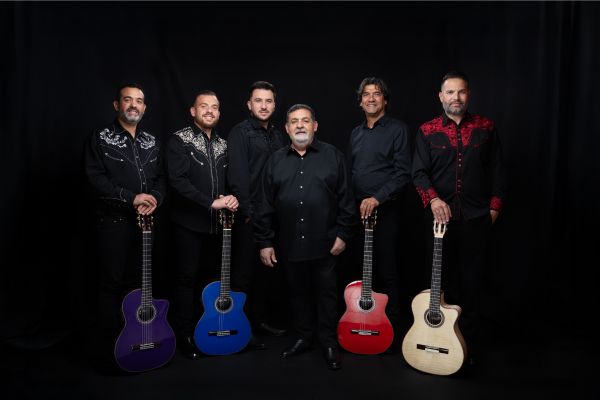

25 million albums sold, modern dance classics like Bamboléo and Djobi, Djoba, sellout tours across the globe and a legendary Glastonbury 2024 performance, which according to a four-star review in The Times gave “any tired legs struggling to make it to the end of a long weekend a new lease of life.” The Gipsy Kings have come a long way since they started out playing the streets, weddings and bars of their native Arles, France in 1979. Perhaps their greatest achievement, however, which continues on their superb new album Historia, is in keeping the rich, passionate, virtuosic traditions of flamenco music and Catalan gipsy culture alive.
“I have been making albums with the Gipsy Kings for over 40 years, so with this one I wanted an an adventurous spirit,” says Tonino Baliardo, who formed the Gitano-French band with his cousin Nicolas Reyes and now plays all over the world with his sons Cosso and Mikeal. “At the same time Historia is about the story of the Gipsy Kings, and what happened when Bamboléo and Djobi, Djoba became global hits. We were ambitious. We knew we were good. But we never expected everything that happened.”
The band rose from the ashes of another family group. Baliardo’s father, the flamenco guitar legend Manitas de Plata, was born in a gipsy caravan in Sete, southern France, his parents having fled persecution under Franco after the Spanish Civil War. De Plata only agreed to perform and make records after the death of the French-Belgian gipsy jazz great Django Reinhardt, believing the music of Romani tradition needed to be kept alive. He went on to be hailed by Pablo Picasso and Jean Cocteau as one of the greatest musicians of the 20th century and formed a duo in the early 70s with his cousin José Reyes, father of Nicolas. When José died in 1979, it was the turn of the sons to pick up the mantle. The Gipsy Kings were born.
“Flamenco is a strong tradition that runs through the family, a tradition that was continued by my father and uncle,” says Baliardo. “I started playing the guitar aged seven and practised for at least five hours a day, every day, from then on. Then I formed the Gipsy Kings with Nicolas and we played the beaches, restaurants and weddings for years, learning on the job, working through the summer season when Provence and the Cote D’Azur was filled with tourists. We became very popular. The restaurants were always asking us to come and play.”
As Romani people, did they ever experience prejudice? “Not really, because we were so well known in Arles, which has an established Romani community. We went from that tightly knit community to global success.”
In 1982 Brigitte Bardot, having seen the Gipsy Kings play around St Tropez, fell in love with the music and asked them to perform at her birthday party. Charlie Chaplin, Charles Aznavour, Johnny Halliday, Tony Curtis and Roman Polanski were among the glamorous guests. The Gipsy Kings repaid the debt they owed to Bardot by dedicating La Dona to her, which paved the way for what was to come: in 1987 came the self titled album Gipsy Kings, the hits Bamboléo and Djobi Djoba, and worldwide fame.
“Everything changed overnight,” says Baliardo. “I was 19 and the only thing we were thinking about back then was making music, having fun, and partying. Brigitte Bardot’s party was filled with celebrities, which was exciting, but from there we were travelling all over the world and discovering that most of our fanbase was young too. People came to the concerts to have a good time. We never worried about anything else.”
Did it take them by surprise? “We believed we would find success. We always had faith that we would get there in the end. But we could never know it would happen in the way it did, and it was certainly a surprise to see our music have such global appeal.”
So global, in fact, that the Gipsy Kings became known for some rather unusual cover versions. A flamenco rendition of the Eagles’ Hotel California made it onto the soundtrack of The Big Lebowski, while their version of Randy Newman’s You’ve Got A Friend In Me was featured on Toy Story 3 (Newman wrote and performed the original song as the theme to the first Toy Story). “We got asked to do them by the producers of the films,” says Baliardo. “We still play both on stage today and they go down a storm, so I’m glad we did.”
Now Historia returns to the Catalan rumba and flamenco roots of the Gipsy Kings while also taking off in new directions. La Guerre is a beautiful ballad that advocates for peace in the face of unnecessary wars, while Sonador, a highlight of the album, takes on touches of reggae and pop for a summer anthem about hanging onto a dream. The flamenco guitar-led Senorita is a simple ode to the innocence and beauty of children, while the upbeat rumba of El Campo is about a Romani clan and the life that goes with it. And Romani culture is embedded into everything the Gipsy Kings do.
“Family is at the heart of everything,” says Baliardo. “My two sons are in the band, and in the Romani community young people are still brought up with flamenco and Catalan rumba. It is a big part of who we are and it is woven into our identity.”
Historia celebrates all of this, and it was made while a documentary crew followed Baliardo to tell the story of his 35 years on the road as a bandleader and musician. It is also a testament to the Gipsy Kings’ enduring legacy because, as he points out, “Throughout it all we have remained faithful to who we are and where we came from.”
With Historia providing a summation of the past, and everything the band has been through, what does the future hold? “I may be a gipsy, but I don’t have a crystal ball,” Baliardo concludes. “My two sons are in the band, we collaborate with their cousins, and there is a new generation who are happy and enthusiastic to be a part of it all.” The gipsy caravan, in other words, shows no sign of slowing down.