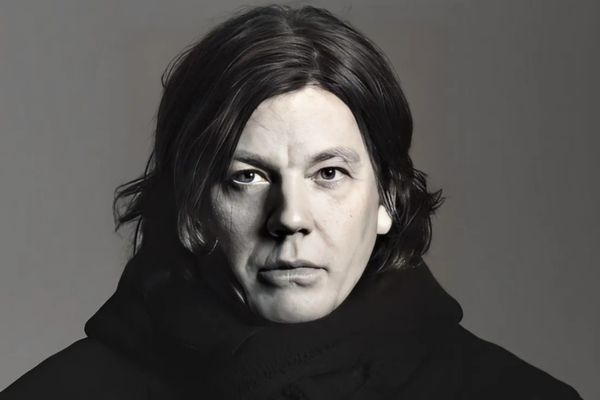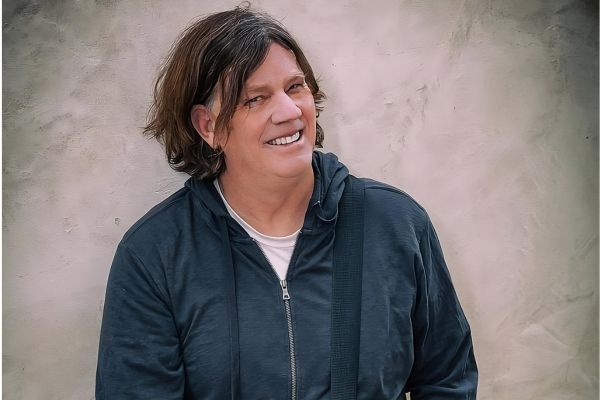
John Andrew Fredrick–guitars, percussion, vocals
Rob Campanella–guitars, bass
Chandler Fredrick–bass, backing vocals
Andy Creighton–guitars, bass, drums, strings arrangements, backing vocals
The praise heaped of late upon John Andrew Fredrick’s long-standing and astonishingly productive Los Angeles indie band–from the likes of Mojo, Shindig!, The Big Takeover and even Prog Magzine–has been nothing less than, well, remarkable. Having made seven albums for ATOM Records (whom they signed to in 2018) plus one for legendary but now defunct A Turntable Friend and one for The Bevis Frond’s imprint in 2026, the black watch have enjoyed a dizzying run, characterized by Mojo as having “indelible melodies unspooling across well-crafted songs with a mostly big-overcoat Bunnymen/Orange Juice aesthetic”; and by venerable Shindig! as “pop confections with psychedelic overtones, Beatlesque nudges and literary lyrics (Fredrick’s a novelist as well) plus an host of great melodies.”
“One of the most consistent and prolific writers in rock,” crows Jack Rabid, Editor-in-Chief of The Big Takeover. “Twenty-six albums and every one worth getting.” Though Fredrick himself mock-resents the aforesaid “p” word. “It seems to me that pointing that out is terribly facile if not banal,” he says from his studio in the all-too-hip Angeleno Heights district; “but songs do seem to pour out of me and I’m, in a not-superstitious way, not sure I’d ever like to find out why. The same thing goes for studio wizardry–where we’ve spent so much time; I don’t think I’ve touched the mixing board more than three times in thirty-eight years: we work with such skilled producers and engineers, you know. There are so many ridiculously talented ones in our corral, as it were.”
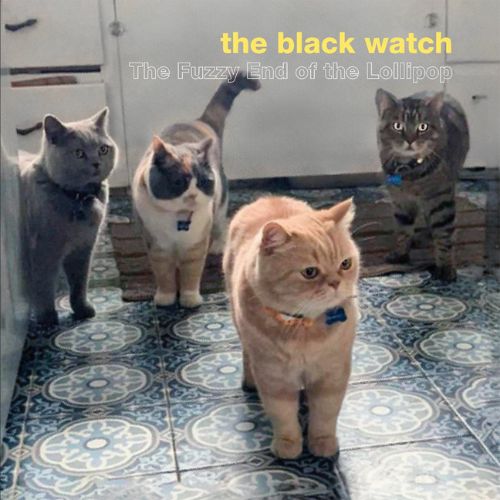
One such producer/engineer is Rob Campanella, ex-of The Brian Jonestown Massacre, who has produced four or so of the most recent TBW LPs and who plays bass live. Another is master producer Scott Campbell (Stevie Nicks, Shelby Lynne, Acetone) who’s been with the band, on and off, since 1991 and who produced Led Zeppelin Five, the band’s whimsically titled, best-selling LP from 2011 (reissued 2020). Yet another is Andy Creighton who joined up in 2017 on guitar and who played the lion’s share of the instruments on The Fuzzy End of the Lollipop.
“Andy had a record industry job doing statistics of some sort and he lost it suddenly and had the hardest time finding a new situation, so I thought it’d be advantageous to us both if we hired him to record the new songs. He works so incredibly fast it’s a marvel. It was almost like we were under a mad sort of pressure to get the record done–and yet we weren’t under any pressure at all. It must have eventuated from overexcitement, the pace we kept; we just couldn’t put a foot wrong, we didn’t think,” Fredrick chuckles; “though that remains, critically, that is, to be seen!”
Fredrick, who holds a Ph.D. in English literature and who taught Freshman Composition at such illustrious universities as USC, Loyola Marymount, and UCSB and who now teaches tennis for children part-time, has been quite vocal about quitting music–and not being capable of quitting. He says that, as a convinced Freudian (not quite fashionable nowadays), he’s fascinated by the idea of completion, of endings.
“I do think substantial changes are nearing, as it were,” he observes; “our time with Andy Creighton has run its course, but my son Chandler and I and Rob and Rob’s drummer brother Andy Campanella are still pretty keen on seeing what we can do.”
“I’ve declared that The Fuzzy End is really the end of TBW, but I’ve been wrong before,” he laughs. “And there are seven or so songs left over from these sessions, so…” Speaking of laughing, the title of the new (and maybe final!) LP is taken from Billy Wilder’s classic slapstick comedy Some Like it Hot, where the boys in drag meet up with Marilyn Monroe as “Sugar Kane”; she’s drinking from a furtive silver flask, you’ll recall, and when asked by Lemon and Curtis why she’s glumly getting tipsy she declares that, as far as her love life’s gone, she’s gotten “the fuzzy end of the lollipop.” A metaphor for a band that’s been a critic’s darling without massive sales? Hardly. For Fredrick considers that his merry band “has had the sweet end for the duration,” since he formed TBW in 1987 and rehearsed in after-hours campus classrooms at the university he taught at, UCSB.
Have at The Lollipop, then–and prepare to get an aural cavity from its sometimes quite tart, often quite sweet flavors, and its (sorry!) licks.