The New York club scene of the early 1980s was a rich source of inspiration for the visiting British bands who had broken through in the aftermath of the UK’s punk and post-punk explosion. But no group immersed themselves in the city’s vibrant underground culture – or its hedonistic spirit and seedy underbelly – quite like Soft Cell. The white-hot fervor of Manhattan’s downtown clubs and the buzz of New York FM radio provided inspiration for the likes of New Order (on “Blue Monday”) and Simple Minds (on “Promised You A Miracle”), but the real trailblazers were Soft Cell.
Singer Marc Almond and multi-instrumentalist and producer Dave Ball made their first two full-length albums, Non-Stop Erotic Cabaret and The Art Of Falling Apart, plus one of the first remix albums Non Stop Ecstatic Dancing, at Mediasound in Hell’s Kitchen (the studio where T. Rex recorded “Jeepster”). The duo launched Non-Stop Erotic Cabaret by throwing a wild party with a Times Square theme (“peep booths and adult performers”) at the Danceteria nightclub. They drank margaritas in the Rainbow Room, met Andy Warhol at the Factory and danced alongside a young Madonna.
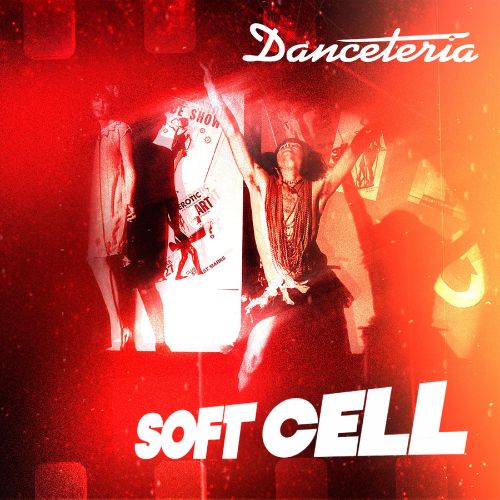
Manhattan was where Marc and Dave went looking for kicks. But it was also the place where they came of age as musicians and individuals, and those pivotal themes are the building blocks for the sixth – and, sadly, final – Soft Cell album. Named after the fabled three-story nightclub that opened in 1980 in an old industrial building on West 21st Street, Danceteria is a love letter to 1980s New York. It explores the duo’s experiences in The Big Apple, soundtracking the course of a symbolic night out that begins and ends on the dance floor and takes some darker and more enigmatic turns along the way. Like all the best Soft Cell records, it’s a series of narratives, with Dave’s cinematic soundscapes in perfect harmony with Marc’s characteristically vivid storytelling.
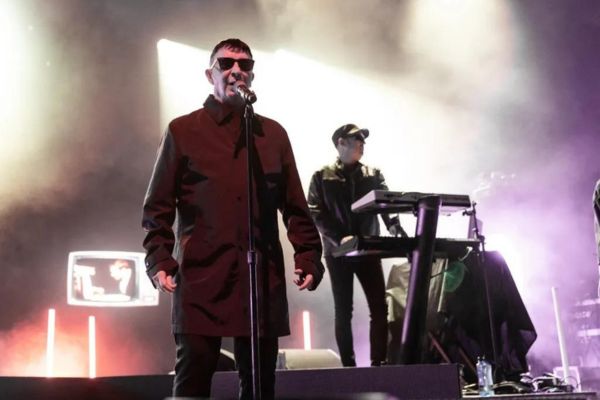
With Dave Ball’s untimely passing in October 2025 at age 66, the new album is a testimony to his arranging skills and innovative production talent. The album’s final mixes were completed just two days before his death, and only two months after his last live appearance with Soft Cell, when the band headlined the Rewind Festival in Henley-On-Thames in front of over 20,000 fans.
“Dave was a wonderfully brilliant musical genius,” says Marc. “I take some solace from the fact that he heard the finished record before he died. He knew it was a great piece of work, and the tunes and hooks are unmistakably Soft Cell. The moment I received the music files from him, it was immediately clear that these songs were among the best he’d ever made. I was stoked and excited, and that helped with my lyrics. When we played Rewind, we talked backstage about how excited we were about this record. Our previous album, ‘Happiness not included, was made during the pandemic. I had Covid quite badly, and it affected my voice and breathing. Dave and I could only communicate with each other through emails and texts. We were more connected on this one.”
Once Marc had received the instrumental music from Dave’s South London studio, he wrote lyrics and decamped to Dean Street Studios in Soho for some “very vibey” recording sessions with his vocal engineer Jonny Solway and regular backing vocalists Louise Marshall, Bryan Chambers and Simon King. Another key contributor was Soft Cell’s touring keyboardist Philip Larsen. A GRAMMY®-winning mixer who co-produced the band’s previous album four years ago, Larsen worked with Dave and Marc as the new record neared completion, again co-producing with Soft Cell.
Danceteria is bookended by two floor-filling pop bangers – the title track and “Out Come the Freaks.” Following on from the spoken words and smoky, ambient electronics of ‘Intro’, the title track is a big, euphoric dance number that reflects the hedonistic spirit of the Manhattan clubs where fabulous fashionistas rubbed shoulders with scene-setters. Among their number were Andy Warhol, Madonna, the artists Jean-Michel Basquiat and Keith Haring, singer Cindy Ecstasy and the DJ Mark Kamins. The album finishes with a joyous, righteous cover of “Out Come The Freaks,” a mutant disco classic originally released in 1981 by the influential Detroit funk-rock band Was (Not Was). Soft Cell’s cover, with Dave on vocals, also features a superb cameo from Nona Hendryx, once of Labelle and another former Danceteria regular.
Says Marc: “Cover versions have always been part and parcel of Soft Cell, and I wanted this record to contain echoes of our debut album. ‘Out Come The Freaks’ was a single on ZE, and I used to play it when I DJed in the 80s. I’d also wanted to do something with Nona for a very long time. She’s a good friend, but we’d never found the right song – until now. We had finished making ‘Out Come The Freaks’, so I sent it to her with a message saying that she could do anything she wanted on it. She took her backing singers into a studio and just sang, adding her own improvisations. She sounds absolutely fantastic.”
There are further up-tempo moments in “Wave To America” – a star-spangled account of the United States reimagined as a kaleidoscopic journey through iconic images – and “Heaven (When I Dance With You),” an unashamed homage to northern soul, one of Dave’s key influences. The latter is an original song, but it stands solidly in the tradition of Soft Cell’s classic soul covers, from their celebrated take on Ed Cobb’s “Tainted Love” (the UK’s biggest-selling single of 1981) to 1982’s “What!” (originally by Judy Street) and 2002’s “The Night” (a hit for Frankie Valli & The Four Seasons).
In time-honoured Soft Cell style, the bangers sit alongside moodier ballads and more reflective moments. On “The Space Inside,” we are transported to the leather bars and transgender sex clubs of Manhattan’s Meatpacking District, where the city’s night owls find themselves “searching for redemption in the night’s decay”. “Times Square” is a mischievous account of an afternoon hook-up in a B-movie cinema, and the shimmering ballad “The Rainbow Room” offers a blow-by-blow account of Marc’s visit to the 65th floor of 30 Rockefeller Plaza. “Losing Yourself” and “After Hours” delve into the darkness that often lurks beyond the dance floor.
“The Danceteria album reflects what we were going through as Brits in New York,” concludes Marc. “We arrived there in 1981 with a bunch of songs that were initially written about London and Leeds. They were songs that reflected the greyness and repression of Margaret Thatcher’s Britain. But once we hit New York, the same songs became infused with a fresh, streetwise sensibility. We were in the clubs, where ecstasy was available for the first time, and we felt privileged to be part of that secret. Our music took on a hybrid quality. We were quintessentially British, but we felt that we were also an honorary American band. So it feels right that the last Soft Cell album is invested in those myths and stories. It brings everything full circle for us, and it’s a fitting tribute to Dave.”
More about Soft Cell
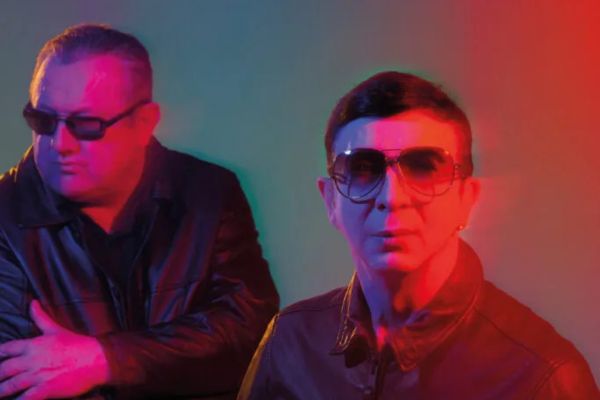
Having first forged a creative bond when they were art students at Leeds Polytechnic in 1977, then becoming Soft Cell in 1979, singer Marc Almond and electronics whizz Dave Ball were propelled into stardom overnight and inadvertently changed the course of 1980s pop. Soft Cell’s huge success set the template for a tsunami of electronic pop acts, including Depeche Mode, Eurythmics, Pet Shop Boys and Erasure. They not only topped the UK singles chart with “Tainted Love” in 1981, they were also Number One in 17 countries worldwide, sold over 21 million records and notched up one platinum album plus two gold ones. Moreover, they brought something deliciously edgy and distinctive to the 1980s pop table, repeatedly flirting with danger and controversy, bordering on self-sabotage, while their glossier peers played it safe.
The duo followed ‘Tainted Love’ with an impressive run of singles in “Bedsitter,” “Say Hello, Wave Goodbye,” “Torch” and “What!,” all of them Top Five hits in the UK. Their seminal debut album, 1981’s Non-Stop Erotic Cabaret, was followed by one of the first remix albums, Non Stop Ecstatic Dancing. Their second full album, 1983’s The Art Of Falling Apart, witnessed Marc adding greater social realism to his lyrics as Dave moved the Soft Cell sound away from shiny pop towards something much darker. The third album of the band’s initial phase, 1984’s This Last Night In Sodom, was a willfully uncommercial farewell now revered as a dark electronic pop masterpiece.
Having gone their separate ways with fruitful solo careers – Marc as a solo artist who explored flamenco, chanson and cabaret, Dave as a record producer and member of classic techno outfit The Grid – the duo reunited as Soft Cell on 2002’s Cruelty Without Beauty. They famously staged an emotional ‘farewell’ show before 20,000 fans at London’s O2 Arena in 2018, and released a further studio album, 2022’s *Happiness not included, which featured a chart-busting collaboration with Neil and Chris from Pet Shop Boys in “Purple Zone.” The album topped the UK dance chart, reached the Top Ten in the main commercial chart, and spawned two sister albums in *Happiness now completed and *Happiness now extended.
With the untimely death of Dave Ball in 2025, the band’s sixth and final album, the much anticipated Danceteria, finally arrives September 25, 2026.